
Shaun J. Wright Brings a Lifetime of House Music, Performance and Purpose to Pines Party
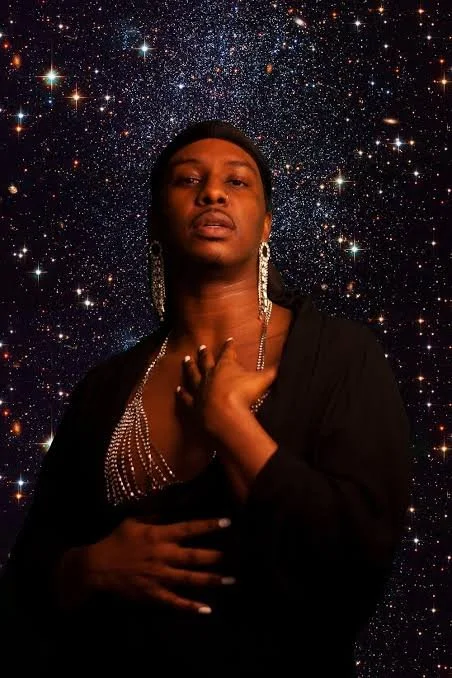
Shaun J. Wright
For Shaun J. Wright, house music has always been woven into the way they move through the world. Growing up in Maywood, a western suburb of Chicago, the music was simply there: on the radio, circulating on cassettes and records, animating clubs and inspiring teenage dance crews like Mega Sweat, where Wright developed their relationship to movement and performance.
That foundation has carried Wright through dance, ballroom, fashion, songwriting, production and live performance. After attending Morehouse College in Atlanta and the London College of Fashion before living in New York and touring internationally with Hercules and Love Affair, Wright eventually returned to Chicago. Today, they are a Smartbar resident and run Twirl with their longtime creative partner and best friend, Alinka.
Together, these experiences have shaped an approach to house music that is personal, historical and expansive: a way of carrying culture and creating space for collective release. Ahead of their Pines Party debut at the Transcendence morning party, Wright caught up with Sainte Francis about the music that shaped them and the joy they hope to share on Fire Island.
Sainte Francis:
Shaun! It's such a pleasure. You’ve had a robust schedule this year. What moments have really energized you?
Shaun J. Wright:
They all kind of blur together, honestly. Movement weekend in Detroit was a highlight. I played back-to-back with Mike Servito, and we closed out The Bunker party in the garden of Tangent Gallery.
I also performed new material at Club Toilet and had some incredible nights at Queen! here in Chicago at Smartbar, where I am a resident. That is home base.
Sainte Francis:
You grew up around Chicago, where house music was part of everyday life. When did it first grab your attention?
Shaun J. Wright:
I cannot pinpoint a date because house music was ubiquitous growing up. But I remember hearing the early Cajual Records material around 1992 and 1993. I was 10 or 11, and it really spoke to me.
I was a kid with a minimal allowance, trying to get to the record store and buy cassette tapes and records. Dajae’s “U Got Me Up,” Derrick Carter’s The Many Shades of Cajual and Jump “Chico” Slamm’s “Feel Free” shaped me. “Feel Free” felt like it was dissecting everything I was experiencing as a young teenager.
I also joined a street dance team called Mega Sweat in Maywood. If you listen to underground Chicago house from the ’90s, there are songs shouting out groups like House-O-Matics, U Phi U and Mega Sweat. Teenagers were responding to the music while creating the dance vocabulary that later became known as juke. I got to be part of that.
Sainte Francis:
Was there a point when you realized you wanted to turn that passion into a career?
Shaun J. Wright:
I knew from that early Cajual material that I wanted to be a DJ, but I did not have the wherewithal to get there. I thought a DJ was like a shaman, that you had to be knighted or appointed by someone. So, I did everything else.
I initially studied engineering and science because I wanted to design roller coasters. I later moved toward drama with a concentration in dance, studying West African dance forms, ballet, modern and jazz.
My career did not begin when I became a professional. Studying the culture and understanding the moods and tones of house music began when I was very young.
Sainte Francis:
Your career has moved through dance, ballroom, fashion and live performance. Do those feel like separate chapters?
Shaun J. Wright:
I cannot compartmentalize them because they are who I am.
I walked balls for a few years, but I was more of an avid spectator, and I loved to vogue. We would vogue in the club for hours and communicate through dance.
At Morehouse, I encountered Black diasporic and regional cultures converging in Atlanta. We heard Baltimore club, D.C. go-go and hyphy music from Oakland in gay clubs. I watched voguers and J-Setters while studying Horton, Graham and Dunham techniques and continuing with West African dance.
By the time I joined Hercules and Love Affair, I had lived in London and was living in New York, working in fashion and immersing myself in the culture. When I saw the Club Kids on Donahue and Sally Jessy Raphael as a kid, I thought, “That is the interior of the world where I know house music exists, and I want to be part of that.”
These things are not separate. They are worlds colliding.
Sainte Francis:
I love that. Given your roots in Chicago, how do you view the state of house music culture today?
Shaun J. Wright:
The state of house music is as complex as it probably has always been. There has been a larger industry component around it as a commodity over the last 20 years.
It is not underground anymore. There are underground components, but what we see in the mainstream does not really reflect its roots. The face of house music is no longer Black or queer, but the sound is. I find that complex and something I have to wrestle with philosophically.
Growing up with the music, you assume it will, in some sense, always belong to your culture. That is not to suggest it is unavailable to others, but I think some of its more indigenous components have been strategically pushed out. Black American music forms repeatedly create something without necessarily being able to live in it or benefit from it.
Every space has its own relationship to house music. Even within Chicago, each side of town had its own dance styles and moves. The bigger things can be homogenous in a way that does not benefit the culture, but I still see it thriving locally in Detroit and Chicago.
We still have people from the time the music was made who can communicate with us. I wish more of their stories were told.
Sainte Francis:
Absolutely. Let’s turn toward Pines Party. This will be your first time playing the party and your second time on Fire Island. What did the invitation mean to you?
Shaun J. Wright:
It is an honor. New bookings always feel like an honor because it means someone new is listening or spreading the message further.
I have never attended Pines Party, so I do not know exactly what I am walking into. But I have seen the other names on the lineup, and I know there will be great music all around. That is what I am looking forward to most: hearing.
Sainte Francis:
You’ll be playing as the sun comes up after a very long night. How do you approach a set like that?
Shaun J. Wright:
My job is to read the room, see what is needed and desired, and converge that with where I think it could go. I want to meet the audience where they are and hopefully have a beautiful journey.
Because the sun will be rising, I think it could be laden with joy, lushness and some sickening vocals. But I do not want to box it into anything. The mood might call for something sexier, more sensual or tropical.
I play my best when I am true to my mood while combining it with the mood of the room. Most importantly, I hope it is fun. We are in such an intense time sociopolitically and economically. People are not going out to be inundated with depression or darkness. I think we need joy.
Sainte Francis:
Absolutely. Beyond having a good time, what do you hope people carry away from one of your sets?
Shaun J. Wright:
I hope they have a greater sense of themselves within the universe. I hope they leave feeling better about life, not worse. I want them to feel more expansive and limitless, and to feel that whatever is unpleasant in their current circumstances is conquerable. I want them to feel blessed.
Sainte Francis:
That’s beautiful. I also want to make sure we talk about Twirl, the label you founded with Alinka. How did that begin?
Shaun J. Wright:
It started when I returned to Chicago after being on tour with Hercules and Love Affair. I had not lived here in more than 12 years, and I was ready to revisit my roots.
I met Alinka here, and she is one of my closest friends in the world. We fell in love the first day we met, which was also the first night of Queen!
We made an EP, Derrick Carter sent our demos to Luke Solomon, and Twirl Volume I came out on Classic, a label we both loved. We later started a party called Twirl. We also had vocal-driven, weird and bloopy material that was not landing elsewhere, so we started our own label.
Sainte Francis:
What is it like creating and running a label with your bestie?
Shaun J. Wright:
With her, it is never ego-driven. It is always about what is best for the song or the label. We respect each other’s strong suits. She trusts me, and I trust her.
Twirl gave us room to make a body of work over time and set our own terms. When it was all said and done, it was about dancing, movement and freedom on the dancefloor.
Sainte Francis:
Before we get into some rapid-fire questions, what are you most excited about for the rest of the year?
Shaun J. Wright:
I am working on new material and fleshing out demos. I am learning to trust my choices independently of collaborations, which have been the larger part of my career as a musician.
I performed three of the new songs at Club Toilet with my sister-in-law, Eleshia Simms Harris, on background vocals and Kim Ann Foxman as my DJ. I am still working through what a live setup will look like and whether I will tour the music. The work is starting to feel rooted and grounded.
Sainte Francis:
And is there anything else you would like to leave us with ahead of Pines Party?
Shaun J. Wright:
I am looking forward to playing in the Pines. The last time I played Fire Island, I saw how beautiful it was, and imagining playing one of the sunrise sets is pretty cool.
I also carry an understanding of the historical weight of having that kind of openly queer space. Even now, when it feels like some of our rights are being diminished, being able to celebrate with one another openly is still very important and groundbreaking in many ways.
I am happy to offer some kind of sonic libation to the space.
Sainte Francis:
I love that. Okay, I have a few rapid-fire questions before I let you go. Are you down?
Shaun J. Wright:
Of course.
Sainte Francis:
What is one song or secret weapon that works anywhere in the world, no matter where you play it?
Shaun J. Wright:
If I tell you, it will not be a secret weapon! But one song that will always and forever work is Basement Jaxx’s “Fly Life.”
I think it is one of the best songs. House, techno, electronic, it is everything. I might play it once or twice a year. I do not play it often, but it is always electric.
Sainte Francis:
I literally just heard both Honey Dijon and Eli Escobar play that track within the last week, and it reminded me how great it is. I was listening to it today while walking to get lunch.
What is one track that has been heavy in your rotation lately?
Shaun J. Wright:
There is a live BBC performance of Samara Joy singing “Lover Man.” She sounds exquisite. I would highly recommend checking it out.
Sainte Francis:
I absolutely will. Finally, who is one DJ or producer people should be paying more attention to?
Shaun J. Wright:
DJ Sedrick from D.C. He is one of my main influences and part of the Black gay circuit of house music DJs. When I was coming up, he reigned for me.
Craig Loftis and Michael Serafini from Chicago too. Serafini is an exquisite DJ with stellar taste. He is also the owner of Gramaphone Records, so his collection includes some of the sickest music from the past 30-plus years.
These people are all appreciated in their own circles. But if you want to know the truth about twirling and how the girls get down, listen to DJ Sedrick.
Sainte Francis:
Shaun, this has been so inspiring and such a pleasure. I’ll see you on the island.
Shaun J. Wright:
See you then!
Catch Shaun J. Wright with IPOK and Jay Alexander for Transcendence: The Morning Party at Pavilion and Tryst Pool Club on Sunday, August 2, 5am - Noon.
